
302G Adventures at Camp Alexander
The best kind of summer camp story starts with a backpack, a patrol (GO PLATY-PIES!) full of energy, and a mountain morning that makes everyone glad they came. For Troop 302G, summer camp at Camp Alexander in Lake George, Colorado offered all of that and more.
Set in the beautiful Colorado outdoors, Camp Alexander gave the Scouts a full week of challenge, learning, laughter, and growth. Between merit badge sessions, campsite duties, rank requirements, camp-wide activities, and quiet moments under the trees, 302G made the most of every day.
This was not just a week away from home. It was a week of practicing leadership, building confidence, and turning Scouting skills into real experience.
A summer camp setting built for adventure

Camp Alexander sits near Lake George, Colorado, surrounded by mountain views, tall trees, cool mornings, and the kind of open space that makes summer camp feel like summer camp. For many Scouts, the setting alone made the week memorable.
Days began early, often with the sounds of camp waking up around them. Scouts moved from tents to flags, from breakfast to merit badge classes, and from one activity area to another. The rhythm of camp helped everyone settle into a routine.
There was always something happening:
Scouts heading to class with notebooks, water bottles, and merit badge books
Patrols organizing gear and checking schedules
Camp staff leading activities with energy and patience
Troop leaders offering guidance while Scouts took more ownership
Evenings filled with stories, reflection, and plans for the next day
The mountain setting added something special to every part of the week. A simple walk across camp became a chance to notice trees, tracks, weather, and wildlife signs. A cool evening at the campsite became a natural time for reflection. Camp Alexander helped turn everyday Scouting moments into lasting memories.
Merit badges kept the Scouts moving and learning
One of the highlights of camp for 302G was the chance to work on a wide range of merit badges. Each Scout had a schedule that matched personal goals, interests, and rank needs. Some chose badges that pushed them outside their comfort zone. Others picked subjects they already loved and wanted to explore more deeply.
The troop worked on several merit badges during the week, including Emergency Preparedness, Camping, Leatherwork, Forestry, and many others.
That mix gave the Scouts a strong balance of outdoor skills, practical knowledge, creativity, and personal responsibility.
Emergency Preparedness built confidence under pressure

Emergency Preparedness is one of those merit badges that asks Scouts to think clearly when situations become stressful. It is not only about knowing what could go wrong. It is about knowing how to respond when help is needed.
During camp, Scouts working on Emergency Preparedness focused on skills such as planning, response, awareness, and preparation. They learned how important it is to stay calm, use available resources, and understand the steps that make a real difference during an emergency.
The value of this badge goes far beyond camp. These lessons apply at home, at school, on hikes, during travel, and in the community. A Scout who understands emergency planning can become a steady helper when others feel unsure.
For 302G, this badge supported one of the core goals of Scouting, learning how to be prepared in a way that is useful, responsible, and grounded in service.
Camping connected skills to real outdoor living

Camping is a central part of the Scouting experience, and Camp Alexander gave Scouts a perfect place to put those skills to work. The Camping merit badge is not just about sleeping in a tent. It asks Scouts to understand planning, gear, cooking, safety, outdoor ethics, and the habits that make a campsite work well.
At summer camp, those lessons were not abstract. They were part of daily life.
Scouts had to manage their equipment, keep track of clothing and essentials, care for their tents, and be ready for changing mountain weather. They practiced the small choices that make camping smoother, such as keeping gear organized, staying hydrated, and planning ahead before leaving the campsite.
The badge also reinforced teamwork. A good campout depends on Scouts doing their part. When everyone helps, the whole patrol benefits. When someone forgets a task, the group learns how to adapt and communicate better next time.
Camp Alexander gave 302G a hands-on setting where Camping requirements felt real because the Scouts were living them every day.
Leatherwork gave Scouts a creative challenge
Not every camp lesson happens on a trail or in a field. Some of the best learning takes place at a workbench, with tools in hand and a project slowly taking shape.
Leatherwork gave Scouts a chance to slow down and focus. They learned about materials, tools, patterns, stamping, cutting, and finishing. The badge encouraged patience and care, because small details matter when making something by hand.
For many Scouts, a Leatherwork project becomes a favorite camp keepsake. It is something they can take home and say, “I made this.” That kind of pride matters. It reminds Scouts that effort turns simple materials into something useful and personal.
Leatherwork also offered a different pace during a busy camp week. After active outdoor sessions, it gave Scouts a chance to sit, concentrate, and create. For a troop with many interests, that variety helped make the week feel full and balanced.
Forestry made the Colorado outdoors part of the classroom

Forestry was a natural fit for a camp surrounded by trees and mountain terrain. Scouts working on this badge had the chance to connect what they learned with the environment around them.
Forestry encourages Scouts to look more closely at the land. Trees become more than scenery. Scouts begin to notice species, growth patterns, forest health, conservation needs, and the role forests play in soil, water, wildlife, and recreation.
At a place like Camp Alexander, those lessons feel immediate. Scouts could connect badge work to the forest they walked through each day. They could see how outdoor spaces need care and how people can enjoy nature while also protecting it.
This badge also supported a larger Scouting lesson: responsible outdoor adventure starts with understanding the land. When Scouts learn how forests work, they become better campers, hikers, and stewards.
Rank requirements turned camp into a week of progress
Merit badges were a major part of the week, but 302G also worked on Rank Requirements throughout camp. Summer camp is one of the best places to make rank progress because the schedule naturally supports Scouting skills.
At camp, Scouts can practice skills in the same environment where those skills matter. Knots, first aid, navigation, outdoor cooking, campsite care, fitness, leadership, and patrol participation all become part of the daily experience.
Rank advancement is not only about checking off requirements. It is about showing growth.
For newer Scouts, camp can help turn unfamiliar skills into something they understand through repetition. They get to practice with older Scouts nearby. They ask questions, try again, and slowly gain confidence.
For more experienced Scouts, rank work often looks different. They may help teach skills, lead parts of the patrol routine, guide younger Scouts, or take responsibility for planning and communication. Those moments build leadership in a way a classroom never could.
Camp also creates natural opportunities for Scoutmaster conferences, skills reviews, and reflection. A week away from normal distractions helps Scouts focus on what they have learned and what they want to work on next.
The daily camp routine taught responsibility
One of the quiet strengths of summer camp is the routine. At first, the schedule can feel busy. After a day or two, Scouts begin to understand the flow and take more ownership.
A typical day at camp often included meals, flags, merit badge classes, troop time, campsite duties, and evening activities. That rhythm gave 302G daily practice in responsibility.
Part of the day | What Scouts practiced |
Morning preparation | Getting ready on time, checking gear, helping the patrol |
Merit badge sessions | Listening, asking questions, completing requirements |
Campsite time | Cleaning, organizing, teamwork, and personal responsibility |
Troop activities | Leadership, communication, and shared decision-making |
Evening reflection | Reviewing progress, celebrating wins, planning for tomorrow |
The routine mattered because no one could do the week for them. Scouts had to keep track of where they needed to be. They had to bring the right materials. They had to manage time, follow through, and support one another.
Those are real life skills. Camp simply gives Scouts a safe and encouraging place to practice them.
Patrol spirit showed up in the small moments
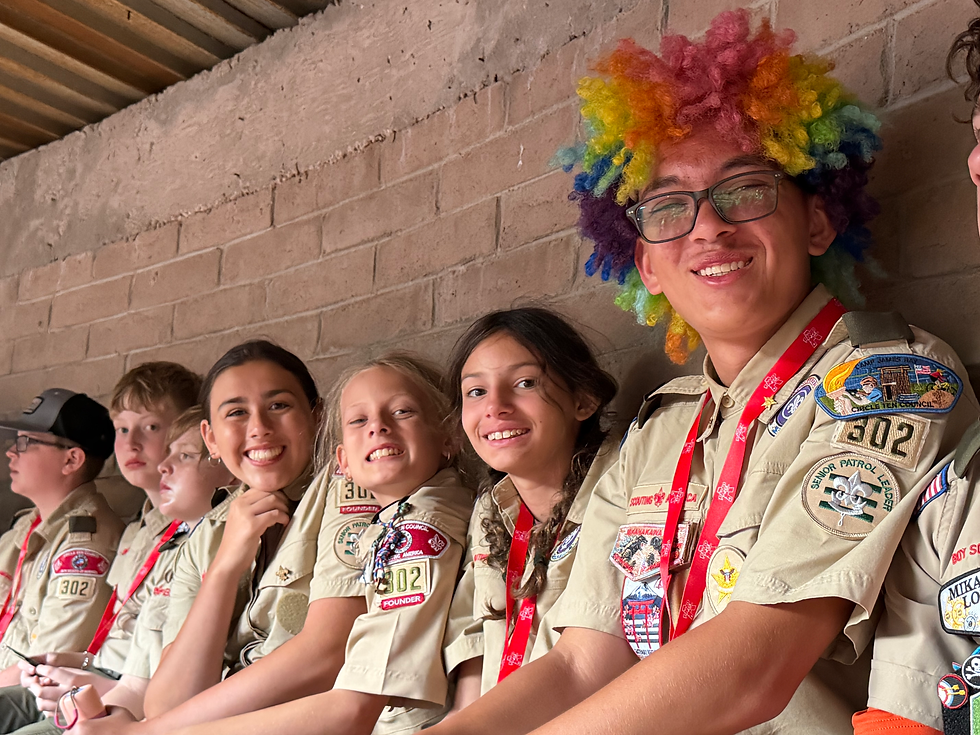
Big achievements are easy to notice. A completed merit badge, a signed rank requirement, or a successful activity stands out right away. But much of what makes camp meaningful happens in smaller moments.
302G’s camp experience was shaped by those everyday acts of patrol spirit:
A Scout helping another find a missing item before class
Older Scouts encouraging newer Scouts through a difficult skill
Patrol members reminding each other to drink water and stay ready
Laughter at the campsite after a long day
Shared excitement when someone finished a requirement
Quiet encouragement when a Scout felt tired or homesick
These moments build trust. They also help Scouts understand that leadership is not always loud or formal. Sometimes leadership looks like noticing who needs help and stepping in.
Camp Alexander gave the troop space to grow as individuals and as a group. By the end of the week, Scouts had not only completed work. They had strengthened friendships and learned more about relying on one another.
Outdoor skills became real through practice

Scouting skills mean more when Scouts use them in a real outdoor setting. At camp, a skill is not just something demonstrated once. It becomes part of the day.
A Scout who practices knots may need that knowledge for setting up equipment. A Scout who studies first aid may better understand why preparedness matters on a trail. A Scout learning about forestry may look at the surrounding woods with new attention. A Scout working on camping skills may realize that planning makes the whole trip more enjoyable.
That connection between learning and doing is one reason summer camp is so valuable.
For 302G, Camp Alexander offered a place where skills became habits. The Scouts had chances to try, make mistakes, correct them, and try again. That kind of learning sticks.
Growth looked different for every Scout
Not every Scout came to camp with the same goals, and not every Scout left with the same achievements. That is part of what makes summer camp special.
For one Scout, success may have been completing a challenging merit badge. For another, it may have been sleeping away from home for the full week. Someone else may have taken a big step by speaking up in a group, teaching a skill, or staying organized without reminders.
The best camp experiences leave room for all of those wins.
302G’s week at Camp Alexander showed that advancement and adventure can happen side by side. Merit badges and Rank Requirements gave the Scouts goals to work toward, but the personal growth went deeper than paperwork.
They practiced independence. They managed busy schedules. They learned new skills. They supported each other. They spent meaningful time outdoors. They came home with stories.
A beautiful week with lessons that last
The 302G Adventures at Camp Alexander story is really a story about growth. The beautiful setting helped make the week memorable, but the Scouts made it meaningful through their effort and attitude.
They worked on Emergency Preparedness, Camping, Leatherwork, Forestry, and many other merit badges. They made progress on Rank Requirements. They strengthened outdoor skills, built confidence, and practiced responsibility in a real camp environment.
Most of all, they experienced what Scouting does best. It brings young people into the outdoors, gives them real challenges, surrounds them with support, and lets them discover what they can do.
Camp Alexander gave 302G the setting. The Scouts brought the spirit.
And by the end of the week, they carried home more than completed requirements. They carried home memories, friendships, new skills, and the confidence that comes from meeting challenges one day at a time.


Comments